


Free guided tour (EN) | La forêt. Solitudes et solidarités. exhibition

  • exhibition
  • visit
  • Mmmhhh tu sembles intéressé par "visit". Clique sur les mots clefs qui te plaisent... et hop ne rate plus rien les concernant. A toi de jouer !

Free guided tour of the "La forêt. Solitudes et solidarités." exhibition (in English)

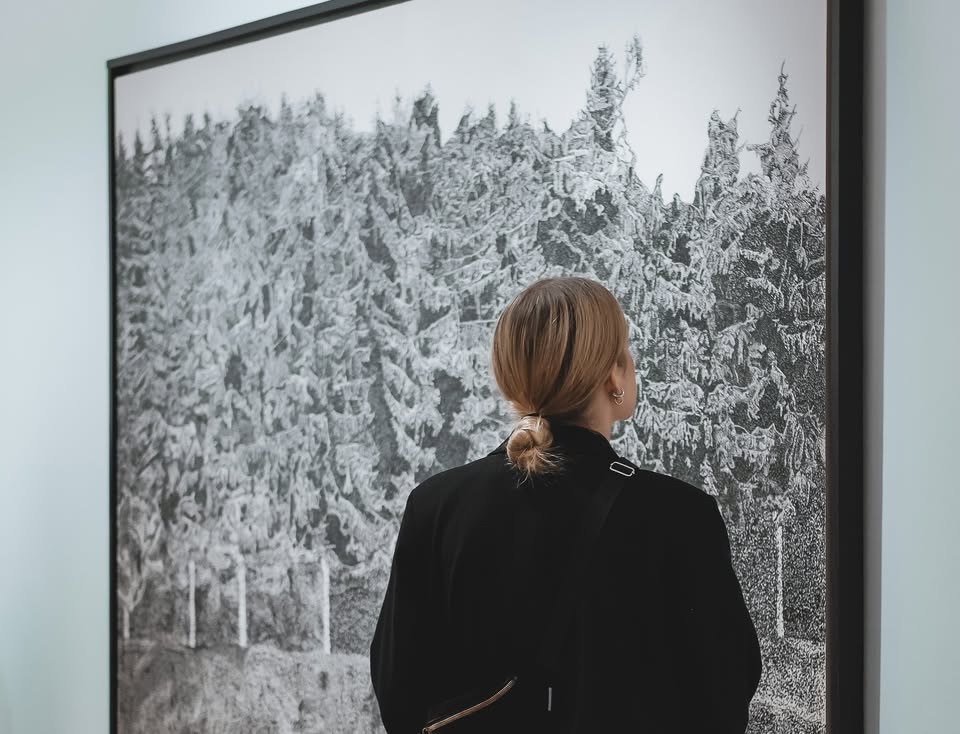
The exhibition entitled "La forêt. Solitudes et solidarités" was developed independently but in resonance with the themes presented by the LUGA. It explores the complex relationships that are woven between urban and forest environments, as well as the role of forests in contemporary imaginations.

In western society, cities and forests are often seen in terms of an opposition between nature and nurture that continues to influence our collective representations, societal projects and development policies. Throughout history, the ways in which human beings relate to forests have been characterised by a profound ambivalence. As spaces that are both mysterious and disturbing, forests are fascinating and frightening in equal measure. Magical and enchanted places in mythological narratives, tales and legends, they also appear as dark, potentially hostile zones that it is important to master. In addition, forests are also viewed through a utilitarian prism. When subjected to the logic of exploitation and management they constitute a precious economic resource.

Nevertheless, in spite of being transformed into administered spaces and integrated into the dynamics of production, forests continue to embody the image of a world on the margins of civilization, resisting its influence. This idealization of nature comes down through the centuries, passing on the myth of a harmonious primal order predating the corruption of progress. Still today, it inspires artistic imaginations with alternative visions of the future, often arising from the idea of a lost golden age.

Similarly, although forest spaces have long been managed and are now frequented mainly for recreational purposes, they continue to be associated with an ideal of liberty, providing an escape valve for those confronted with the acceleration of urban lifestyles and the pressure of productivism. Not restricted by the imperatives of performance, forests set their own pace and are seen as soothing spaces conducive to introspection. Far from the anonymity of cities, the experience of solitude in the heart of nature reconnects us with a quest for authenticity and a return to roots. As sanctuaries and breathing spaces, forests retain their Romantic aura, providing artists with a source of contemplation and inspiration.

Situated at the intersection of contemporary ecological, cultural and social issues, forests also constitute a unique subject of study for contemporary sciences. Far from corresponding to a harmonious vision, forest milieux reveal a living and complex world where opportunism and surprising symbiotic relationships abound. Nothing exists on its own in these spaces. Life is woven out of mutual relationships that are constantly influenced by imbalances and adjustments. The temporary dominance of one species by no means ensures its continuation. Little by little, the famous concept of “survival of the fittest” is giving way to one of efficiency founded on cooperation. The resilience of an ecosystem is sometimes ensured by tenuous encounters between species.

Thus, the converging views of anthropology, biology and art now afford us a broader comprehension of the living world. They invite us to reconsider our models of society by extending them beyond the human domain. Together, these approaches pave the way toward a world in which solidarity and mutual assistance supersede competition by showcasing supple and collaborative models.

Exhibition organized as part of the off-site program of LUGA – Luxembourg Urban Garden.

Artists: Clément Davout and Léo Fourdrinier, Serge Ecker, Martine Feipel and Jean Bechameil, Aline Forçain, Sandra Lieners, Letizia Romanini, Keong-A Song, Bert Theis, Alexandra Uppman, Valentin van der Meulen.


Good to know

Free entrance and without registration.
Exhibition organized as part of the off-site program of LUGA – Luxembourg Urban Garden.


Cercle Cité

Where does it take place?

Undefined Cercle Cité

Cercle Cité
Cercle Cité


SEE MAP

by enovos logo

Weather forecast ()

sat. 20
/ 8°

REF.#618838 - A MISTAKE? LET US KNOW


Otherwise… check out the agenda

THE AGENDA

see all the things
to do around you

Take Supermiro
everywhere with you.

ios android

Hey, don’t go away...
Get the best
outings around you

All the best deals
events
spots

  • Favorites
  • 2025-12-20 15:00:00 2025-12-20 16:00:00 Europe/Paris Free guided tour (EN) | La forêt. Solitudes et solidarités. exhibition Free guided tour of the "La forêt. Solitudes et solidarités." exhibition (in English) The exhibition entitled "La forêt. Solitudes et solidarités" was developed independently but in resonance with the themes presented by the LUGA. It explores the complex relationships that are woven between urban and forest environments, as well as the role of forests in contemporary imaginations. In western society, cities and forests are often seen in terms of an opposition between nature and nurture that continues to influence our collective representations, societal projects and development policies. Throughout history, the ways in which human beings relate to forests have been characterised by a profound ambivalence. As spaces that are both mysterious and disturbing, forests are fascinating and frightening in equal measure. Magical and enchanted places in mythological narratives, tales and legends, they also appear as dark, potentially hostile zones that it is important to master. In addition, forests are also viewed through a utilitarian prism. When subjected to the logic of exploitation and management they constitute a precious economic resource. Nevertheless, in spite of being transformed into administered spaces and integrated into the dynamics of production, forests continue to embody the image of a world on the margins of civilization, resisting its influence. This idealization of nature comes down through the centuries, passing on the myth of a harmonious primal order predating the corruption of progress. Still today, it inspires artistic imaginations with alternative visions of the future, often arising from the idea of a lost golden age. Similarly, although forest spaces have long been managed and are now frequented mainly for recreational purposes, they continue to be associated with an ideal of liberty, providing an escape valve for those confronted with the acceleration of urban lifestyles and the pressure of productivism. Not restricted by the imperatives of performance, forests set their own pace and are seen as soothing spaces conducive to introspection. Far from the anonymity of cities, the experience of solitude in the heart of nature reconnects us with a quest for authenticity and a return to roots. As sanctuaries and breathing spaces, forests retain their Romantic aura, providing artists with a source of contemplation and inspiration. Situated at the intersection of contemporary ecological, cultural and social issues, forests also constitute a unique subject of study for contemporary sciences. Far from corresponding to a harmonious vision, forest milieux reveal a living and complex world where opportunism and surprising symbiotic relationships abound. Nothing exists on its own in these spaces. Life is woven out of mutual relationships that are constantly influenced by imbalances and adjustments. The temporary dominance of one species by no means ensures its continuation. Little by little, the famous concept of “survival of the fittest” is giving way to one of efficiency founded on cooperation. The resilience of an ecosystem is sometimes ensured by tenuous encounters between species. Thus, the converging views of anthropology, biology and art now afford us a broader comprehension of the living world. They invite us to reconsider our models of society by extending them beyond the human domain. Together, these approaches pave the way toward a world in which solidarity and mutual assistance supersede competition by showcasing supple and collaborative models. Exhibition organized as part of the off-site program of LUGA – Luxembourg Urban Garden. Artists: Clément Davout and Léo Fourdrinier, Serge Ecker, Martine Feipel and Jean Bechameil, Aline Forçain, Sandra Lieners, Letizia Romanini, Keong-A Song, Bert Theis, Alexandra Uppman, Valentin van der Meulen. Cercle Cité Cercle Cité
CLOSE

Favorites

To check your Favorites, connect to your account!

CLOSE

Favorites

To check your Favorites, connect to your account!

CLOSE
CLOSE

Customize your results

To get to your Preferences, connect to your account!

CLOSE

Follow a theme

To follow this Theme, connect to your account!

CLOSE

Follow a theme

To follow this Theme, connect to your account!

CLOSE

Follow some Good Spots

To follow this Good Spot, connect to your account!

CLOSE

Follow a Business

To follow this Business, connect to your account!

CLOSE

Drop your Event

To drop an event, connect to your account!

CLOSE

Yes I want to delete it

Yes No
CLOSE

Well done! Your settings have been applied to the other Supernotifs edition

CLOSE

Drop your Event

To drop an event, connect to your account!

tu n'as pas autorisé la localisation ?

CLOSE
CLOSE
CLOSE

Supermiro is getting a makeover for Brussels and Geneva.
The service will not be available for the next few months in these two areas.
But remains AVAILABLE for Luxembourg and the Greater Region.