

Terraforming: Historical Vision, Challenges, Limits

  • conference
  • projection
  • Mmmhhh tu sembles intéressé par "projection". Clique sur les mots clefs qui te plaisent... et hop ne rate plus rien les concernant. A toi de jouer !

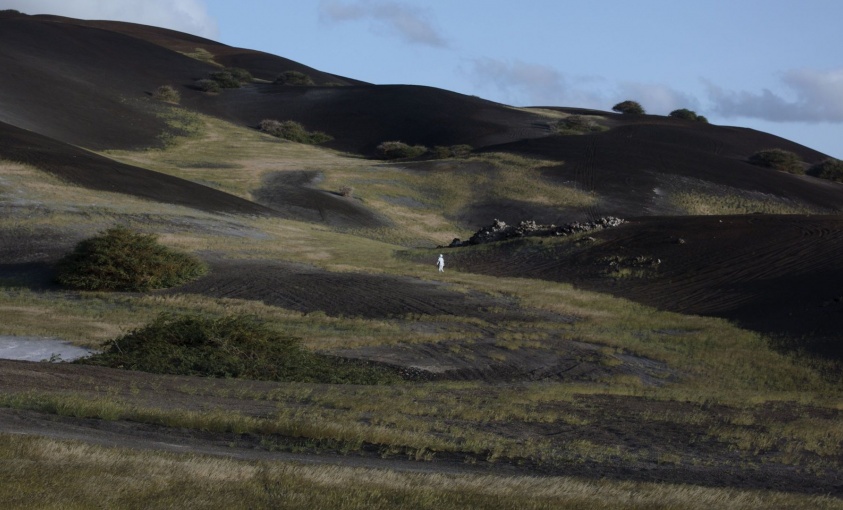
TerraForma tells the remarkable story of Ascension Island, a remote volcanic outcrop in the South Atlantic Ocean that emerged from the sea just over a million years ago, a geological newborn in the Earth's 4.6-billion-year history. Located about 1,600 kilometers from the nearest landmass, this arid island remained largely lifeless for millennia—a stark landscape of volcanic rock and ash with minimal vegetation, earning it the nickname "island of ashes" by early sailors. Its youth meant that life had barely begun to establish itself when humans arrived. Discovered by the Portuguese on Ascension Day in 1503, the island remained uninhabited until the British established a naval garrison there in 1815 following Napoleon's exile to nearby Saint Helena. What followed was one of the most ambitious ecological experiments in history. When Charles Darwin visited the island in 1836 aboard the HMS Beagle, he was struck by its arid desolation and suggested it should be transformed into a "productive place." Seven years later, in 1843, botanist Joseph Hooker visited and, encouraged by Darwin's vision, drew up an ambitious plan to turn Ascension's barren summit, Green Mountain, into a lush garden. From 1847, Hooker, who would later lead the Royal Botanic Gardens at Kew, organized the shipment of plants, trees, and seeds from across the Empire—Australian eucalyptus, Asian bamboo, Norfolk pines from the Pacific—creating an entirely artificial ecosystem atop the island. This "terraforming" project of the Victorian era reshaped the island's ecology to meet the British Empire's political and economic needs, establishing a green supply station for ships and a symbol of imperial power over nature—but only at the expense of what existed before. The new environment, apparently a paradise, was in fact a mirage: a reflection of Victorian ambition, empire, and understanding of the natural world. And as such, it was doomed to unexpected failure. Many believe that future geoengineering projects on our planet, or terraforming of other planets, would simply follow the same pattern. With the help of experts in geoengineering, ecology, politics, and design, TerraForma explores lessons we might learn from Ascension Island's unique history. What does its story mean for our planet, in a future where terraformed landscapes and human-shaped environments could distort our understanding of "nature" itself?


Good to know

62 min film by Kevin Brennan and Laurence Durkin, followed by a discussion with the directors.
Free entry, registration required.
Automatically translated from French.


Cercle Cité

Where does it take place?

1648 Luxembourg Pl. d'Armes, 1648 Ville-Haute Luxembourg

Cercle Cité
Pl. d'Armes
1648 Ville-Haute Luxembourg



SEE MAP

by enovos logo

Weather forecast (Luxembourg)

fri. 19
/ 10°
sat. 20
/ 8°
sun. 21
/ 8°

REF.#618895 - A MISTAKE? LET US KNOW


Otherwise… check out the agenda

THE AGENDA

see all the things
to do around you

Take Supermiro
everywhere with you.

ios android

Hey, don’t go away...
Get the best
outings around you

All the best deals
events
spots

  • Favorites
  • 2026-03-25 18:00:00 2026-03-25 20:00:00 Europe/Paris Terraforming: Historical Vision, Challenges, Limits TerraForma tells the remarkable story of Ascension Island, a remote volcanic outcrop in the South Atlantic Ocean that emerged from the sea just over a million years ago, a geological newborn in the Earth's 4.6-billion-year history. Located about 1,600 kilometers from the nearest landmass, this arid island remained largely lifeless for millennia—a stark landscape of volcanic rock and ash with minimal vegetation, earning it the nickname "island of ashes" by early sailors. Its youth meant that life had barely begun to establish itself when humans arrived. Discovered by the Portuguese on Ascension Day in 1503, the island remained uninhabited until the British established a naval garrison there in 1815 following Napoleon's exile to nearby Saint Helena. What followed was one of the most ambitious ecological experiments in history. When Charles Darwin visited the island in 1836 aboard the HMS Beagle, he was struck by its arid desolation and suggested it should be transformed into a "productive place." Seven years later, in 1843, botanist Joseph Hooker visited and, encouraged by Darwin's vision, drew up an ambitious plan to turn Ascension's barren summit, Green Mountain, into a lush garden. From 1847, Hooker, who would later lead the Royal Botanic Gardens at Kew, organized the shipment of plants, trees, and seeds from across the Empire—Australian eucalyptus, Asian bamboo, Norfolk pines from the Pacific—creating an entirely artificial ecosystem atop the island. This "terraforming" project of the Victorian era reshaped the island's ecology to meet the British Empire's political and economic needs, establishing a green supply station for ships and a symbol of imperial power over nature—but only at the expense of what existed before. The new environment, apparently a paradise, was in fact a mirage: a reflection of Victorian ambition, empire, and understanding of the natural world. And as such, it was doomed to unexpected failure. Many believe that future geoengineering projects on our planet, or terraforming of other planets, would simply follow the same pattern. With the help of experts in geoengineering, ecology, politics, and design, TerraForma explores lessons we might learn from Ascension Island's unique history. What does its story mean for our planet, in a future where terraformed landscapes and human-shaped environments could distort our understanding of "nature" itself? Pl. d'Armes, 1648 Ville-Haute Luxembourg Cercle Cité
CLOSE

Favorites

To check your Favorites, connect to your account!

CLOSE

Favorites

To check your Favorites, connect to your account!

CLOSE
CLOSE

Customize your results

To get to your Preferences, connect to your account!

CLOSE

Follow a theme

To follow this Theme, connect to your account!

CLOSE

Follow a theme

To follow this Theme, connect to your account!

CLOSE

Follow some Good Spots

To follow this Good Spot, connect to your account!

CLOSE

Follow a Business

To follow this Business, connect to your account!

CLOSE

Drop your Event

To drop an event, connect to your account!

CLOSE

Yes I want to delete it

Yes No
CLOSE

Well done! Your settings have been applied to the other Supernotifs edition

CLOSE

Drop your Event

To drop an event, connect to your account!

tu n'as pas autorisé la localisation ?

CLOSE
CLOSE
CLOSE

Supermiro is getting a makeover for Brussels and Geneva.
The service will not be available for the next few months in these two areas.
But remains AVAILABLE for Luxembourg and the Greater Region.