
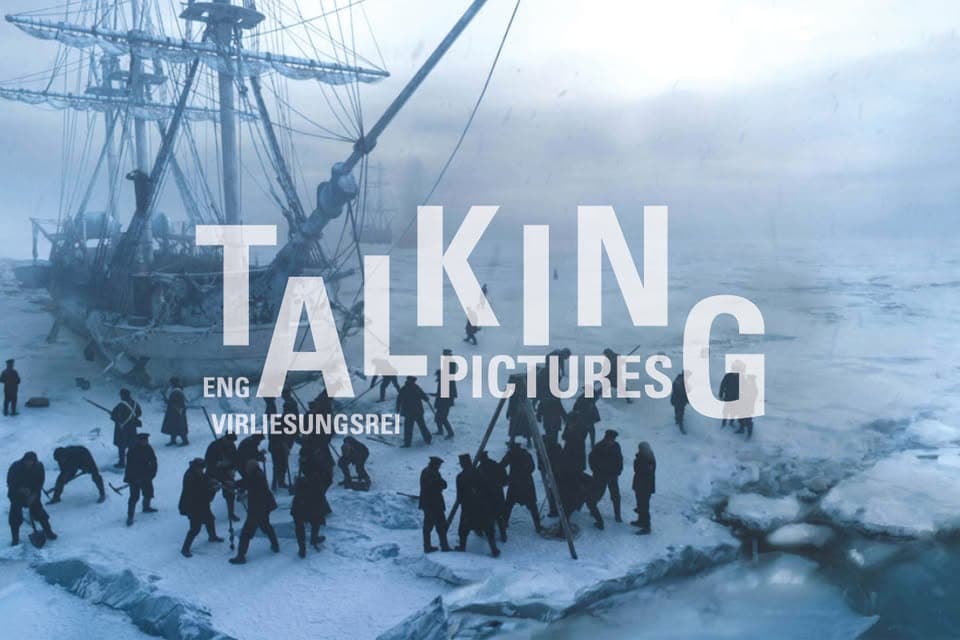
Conference | Talking Pictures: Terrae Incognitae – The Sea as a Colonial Space in Cinema

  • conference
  • music
  • Mmmhhh tu sembles intéressé par "music". Clique sur les mots clefs qui te plaisent... et hop ne rate plus rien les concernant. A toi de jouer !

The sea is always a political space in historical and adventure cinema. From a ship’s departure and passage to its arrival at foreign shores, film history marks the steps of colonial expansion as a sequence of maritime thresholds: the port as a place of departure and return, the ship as a floating order of hierarchy and violence, the open sea as a space of dissolution, the coastline as a scene of first encounters, and finally the mainland as territory to be mapped, explored, and conquered.

The talk analyzes how cinema stages these steps and makes colonial power relations visible, focusing on maritime expeditions as founding scenes of colonial appropriation: conquistadors’ voyages, imperial naval campaigns, the slave transports of the Middle Passage – each journey distilling the logic of colonization. Rivers lead into the unknown interior, coastlines are frontlines of appropriation, and land surveying completes what seafaring has begun.

Piracy sometimes became a counter-economy to imperial trade; these structures persist into pop culture, as shown in the Pirates of the Caribbean series, where the East India Company acts as an antagonist displaying colonial power logic while making it consumable. Starting from Joseph Conrad’s Heart of Darkness and Herman Melville’s Moby-Dick as key texts, the talk covers expedition films from the silent era to Werner Herzog's Aguirre, the Wrath of God (1972), Francis Ford Coppola’s Apocalypse Now (1979), Steven Spielberg’s Amistad (1997), Peter Weir’s Master and Commander (2003), Lucrecia Martel’s Zama (2017), Mati Diop’s Atlantique (2019), and the series The Terror (2018) which tells the failed Franklin expedition in the Arctic as a parable of imperial hubris. Through these and other examples, the talk shows how cinema envisions the sea as a political, economic, and mythological space—how film itself becomes a medium for both colonial and anti-colonial imagination.


Good to know

Speaker: Yves Steichen
Language: Luxembourgish with simultaneous interpretation in French
Free entry
Automatically translated from German.


Where does it take place?

1B rue du Centenaire
3475 Dudelange
Luxembourg


SEE MAP

by enovos logo

Weather forecast ()

sat. 30
16° / 27°
sun. 31
13° / 21°
mon. 1
/ 20°

REF.#642193 - A MISTAKE? LET US KNOW


Otherwise… check out the agenda

THE AGENDA

see all the things
to do around you

Take Supermiro
everywhere with you.

ios android

Hey, don’t go away...
Get the best
outings around you

All the best deals
events
spots

  • Favorites
  • 2026-11-28 10:00:00 2026-11-28 11:00:00 Europe/Paris Conference | Talking Pictures: Terrae Incognitae – The Sea as a Colonial Space in Cinema The sea is always a political space in historical and adventure cinema. From a ship’s departure and passage to its arrival at foreign shores, film history marks the steps of colonial expansion as a sequence of maritime thresholds: the port as a place of departure and return, the ship as a floating order of hierarchy and violence, the open sea as a space of dissolution, the coastline as a scene of first encounters, and finally the mainland as territory to be mapped, explored, and conquered. The talk analyzes how cinema stages these steps and makes colonial power relations visible, focusing on maritime expeditions as founding scenes of colonial appropriation: conquistadors’ voyages, imperial naval campaigns, the slave transports of the Middle Passage – each journey distilling the logic of colonization. Rivers lead into the unknown interior, coastlines are frontlines of appropriation, and land surveying completes what seafaring has begun. Piracy sometimes became a counter-economy to imperial trade; these structures persist into pop culture, as shown in the Pirates of the Caribbean series, where the East India Company acts as an antagonist displaying colonial power logic while making it consumable. Starting from Joseph Conrad’s Heart of Darkness and Herman Melville’s Moby-Dick as key texts, the talk covers expedition films from the silent era to Werner Herzog's Aguirre, the Wrath of God (1972), Francis Ford Coppola’s Apocalypse Now (1979), Steven Spielberg’s Amistad (1997), Peter Weir’s Master and Commander (2003), Lucrecia Martel’s Zama (2017), Mati Diop’s Atlantique (2019), and the series The Terror (2018) which tells the failed Franklin expedition in the Arctic as a parable of imperial hubris. Through these and other examples, the talk shows how cinema envisions the sea as a political, economic, and mythological space—how film itself becomes a medium for both colonial and anti-colonial imagination. 1B rue du Centenaire , 3475 Dudelange, Luxembourg Centre national de l'audiovisuel (CNA)
CLOSE

Favorites

To check your Favorites, connect to your account!

CLOSE

Favorites

To check your Favorites, connect to your account!

CLOSE
CLOSE

Customize your results

To get to your Preferences, connect to your account!

CLOSE

Follow a theme

To follow this Theme, connect to your account!

CLOSE

Follow a theme

To follow this Theme, connect to your account!

CLOSE

Follow some Good Spots

To follow this Good Spot, connect to your account!

CLOSE

Follow a Business

To follow this Business, connect to your account!

CLOSE

Drop your Event

To drop an event, connect to your account!

CLOSE

Yes I want to delete it

Yes No
CLOSE

Well done! Your settings have been applied to the other Supernotifs edition

CLOSE

Drop your Event

To drop an event, connect to your account!

tu n'as pas autorisé la localisation ?

CLOSE
CLOSE
CLOSE

Supermiro is getting a makeover for Brussels and Geneva.
The service will not be available for the next few months in these two areas.
But remains AVAILABLE for Luxembourg and the Greater Region.